-
Pareidolia is a psychological phenomenon in which the mind responds to a stimulus, usually an image or a sound, by perceiving a familiar pattern where none exists. Common examples are perceived images of animals, faces, or objects in cloud formations, the Man in the Moon, the Moon rabbit, hidden messages in recorded music played in reverse or at higher- or lower-than-normal speeds, and hearing indistinct voices in random noise such as that produced by air conditioners or fans.[1]
-
Prosopagnosia, also called face blindness,[2] is a cognitive disorder of face perception in which the ability to recognize familiar faces, including one’s own face (self-recognition), is impaired, while other aspects of visual processing (e.g., object discrimination) and intellectual functioning (e.g., decision-making) remain intact.
Our eyes are not cameras, and our understanding of the world takes place in the software in our brain. Facial recognition, especially, is a weird thing.
All the attributes of a face combined make over a trillion possible combinations. Our ability to recognise a face rests on a few points of comparison, not a 100% assay of the face. And some of us have difficulty using this information in a meaningful way, and have some degree for face blindness, or prosopagnosia. In extreme cases, a person may not be able to recognize that a group if details makes up a face at all.
And yet many of us see faces where there are none.
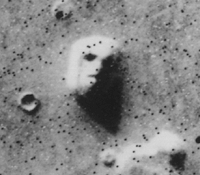
This is called pareidolia. The pattern recognition software in our brains goes a bit overboard and sees things in random or arbitrary details that aren’t really there. Presumably, patterns, and faces especially, are so important to our brains that it is better to have a fals positive than a false negative.
And then there’s the information that faces convey. Again, the software works mostly automatically in most people, but our emotional state and a surprising amount of meaning in our communication comes from small tells in our facial expression. For those with difficulty reading faces, this can be extremely frustrating, as no one seems to know how to teach a skill that is largely unconscious in the majority of humans.
But there has been some attempt to create a language around facial communication.

FACS, or Facial Action Coding System, gives us a way to describe the various ways our facial muscles can change the shape of our face, and give us something linguisitically to grab onto when describing emotional expressions. The system shows 64 different muscular positions. Even if each one were only two positons, on or off, this would mean 18,446,744,073,709,551,616 different possible facial expressions. More than enough for a complete language.
ASL – American Sign Language – is a language of gestures, but also of facial expressions. The grammar of a sentence can be changed by various expression modifiers indication size, position, attitude, questions, etc.

And facial disfigurements often make us uneasy beause they break the pattern.
Faces. Damn. Complicated things, huh?
 Haunted Spoons